Monday, March 14, 2016

Oil prices may have bottomed out, says IEA

The International Energy Agency (IEA) says it believes oil prices may have bottomed out, according to Reuters. The energy agency considered declining US production, accelerating production in other countries, and a less-than-dramatic Iranian return to production as factors in its comments on the state of oil prices.
The IEA expects that non-OPEC output could fall by 750,000 barrels per day (b/d) in 2016 compared to its previous estimate of 600,000 b/d. #US #production alone could decline by 530,000 b/d this year, it believes.

Reuters noted that oil prices fell below $30 per barrel in January, in part due to a supply glut stemming from strong US output and OPEC's decision to increase supply to protect market share against higher-cost producers. Prices recently rose to $40 per barrel after #SaudiArabia and #Russia suggested they could freeze output.

In February, #OPEC output decreased by 90,000 b/d, in large measure due to production outages in Nigeria, Iraq, and the United Arab Emirates. The IEA estimates that Iran’s production increased by 220,000 b/d, marking a more gradual return to anticipated production levels than previously expected.

Source: OGFJ

Sunday, March 13, 2016

Russia seen exporting 180,000 bpd more oil in 2016

BOSTON -- Russia will export about 180,000 bopd more in 2016 as compared to last year, analysts said Friday.

According to ESAI Energy, exports via pipelines and Far East ports leading directly to Asia will only increase by 50,000 bopd, with the remainder of the growth coming in outflows from European ports.

Higher exports from European ports will encourage greater outflows of Russian crude from Europe to Asia, intensifying the battle for market share there as well as in Europe.

Source: worldoil.com

Friday, March 11, 2016

Brent crude climbs as International Energy Agency says oil may have bottomed out

From @TheGuardian -- Crude prices and commodity companies are climbing after the International Energy Agency said oil may have bottomed.

The organisation, which coordinates energy policies of industrialised countries, said output from non-Opec countries was beginning to fall quickly and production from Iran - which has only just returned to the export market following the lifting of sanctions - was not dramatic.

It now believes non-Opec production would fall by 750,000 barrels a day this year compared to earlier forecasts of a 600,000 decline, with US output down by 530,000.

Output from Opec countries fell by 90,000 barrels a day in February due to production problems in Nigeria, Iraq and the United Arab Emirates.

Iran has been less than keen to join a proposed freeze of output at January levels, preferring to increase output now it is back on world markets. Brent crude fell on Thursday after suggestions that a meeting in Russia to discuss curbing the supply glut had been cancelled because of Iran’s position. But the IEA said: "Iran’s return to the market has been less dramatic than the Iranians said it would be: in February we believe that production increased by 220,000 barrels a day and, provisionally, it appears that Iran’s return will be gradual." .

On the overall position it added: "There are clear signs that market forces are working their magic and higher-cost producers are cutting output... For prices there may be light at the end of what has been a long, dark tunnel but we cannot be precisely sure when in 2017 the oil market will achieve the much desired balance. It is clear that the current direction of travel is the correct one, although with a long way to go.". Just a month ago the IEA warned the global oil glut was set to worsen.

The New ORB

The new OPEC Reference Basket (ORB) introduced on 16 June 2005, is currently made up of the following: Saharan Blend (Algeria), Girassol (Angola), Oriente (Ecuador), Minas (Indonesia), Iran Heavy (Islamic Republic of Iran), Basra Light (Iraq), Kuwait Export (Kuwait), Es Sider (Libya), Bonny Light (Nigeria), Qatar Marine (Qatar), Arab Light (Saudi Arabia), Murban (UAE) and Merey (Venezuela).
Notes:
As of January 2006: The Weekly, Monthly, Quarterly & Yearly averages are based on daily quotations.
As of January 2007: The basket price includes the Angolan crude "Girassol".
As of 19 October 2007: The basket price includes the Ecuadorean crude "Oriente".
As of January 2009: The basket price excludes the Indonesian crude "Minas".
As of January 2009: The Venezuelan crude "BCF-17" was replaced by the crude "Merey".
As of January 2016: The basket price includes the Indonesian crude "Minas".
Source: opec.org

Thursday, March 10, 2016

Saudi Aramco said to seek advice on assets and timing for IPO

Saudi Arabian Oil Co. has asked consultants to bid for a role advising it on which assets to privatize and how to execute a potential share sale as the kingdom presses ahead with plans for an initial public offering, people with knowledge of the matter said.

Aramco, as the world’s largest crude exporter is known, sent the request for proposals to international strategy firms about three weeks ago to study scenarios for an initial public offering, including how long the process might take and which assets or joint ventures to include, the people said, asking not to be named as the details aren’t public. Results of the study will be submitted to the government during the first half, according to the people.

Options being considered include selling shares in the parent company, placing Aramco’s domestic and overseas downstream joint ventures into a holding company and selling shares in that, or grouping together the company’s joint ventures and smaller refineries, one of the people said. Request for proposals haven’t been sent to banks yet, the people said.

Deputy Crown Prince Mohammed bin Salman surprised investors and analysts in January by saying that the kingdom was considering an IPO as part of a broader package of economic reforms. The company later confirmed that options included a full initial public offering or the listing of some of its subsidiaries. Bringing in investors would strengthen the company’s focus on long-term growth and the prudent management of its reserves, according to a statement from the company in January.

Saudi Aramco declined to comment.

Aramco currently pumps all of Saudi Arabia’s crude oil, with production at 10.2 MMbpd in February. With relatively opaque operations, the company could fetch a value of anywhere from $1 trillion to $10 trillion, potentially making it the most valuable company in the world, according to Jason Tuvey, an economist and researcher at Capital Economics.

The idea is being considered as OPEC’s biggest oil producer responds to a crash in crude prices and the government cuts spending, delays projects, taps foreign reserves and issues debt as it takes on a budget deficit expected to reach about 17.8% of economic output this year, according to Riyadh-based Jadwa Investment Co.

Source: worldoil.com

Total plans hunt for 'elephant' oil find off Uruguay's coast

MONTEVIDEO, Uruguay (Bloomberg) -- France’s Total SA is weeks away from drilling one of its most important offshore exploration wells in the Americas this year as it hunts for a giant oil field in Uruguayan waters.

"There could be an elephant out there. This is what we’re chasing," Christian Tichatschke, Total’s exploration director in Uruguay, said in an interview in Montevideo on Friday. "It’s a very risky project but we believe we can find something."

A discovery could extend an exploration boom in a country that currently imports all of its oil and gas needs. Total, Tullow Oil Plc, BG Group Plc and BP Plc have invested more than $1 billion in exploration activities since they won eight offshore blocks in 2012, said Hector de Santa Ana, E&P director at state-run oil company and sector regulator Ancap.

Uruguay’s offshore potential has triggered a spurt of deal-making in recent months even as benchmark oil prices trade at 12-year lows. Norway’s Statoil ASA said last month that it acquired a 35% stake in a block held by Tullow. Statoil and Exxon Mobil Corp. have also acquired minority stakes in Total’s block.

"The fact that you manage to get partners interested in this low oil price environment means that it’s an interesting prospect," Horacio Cuenca, Latin America upstream research director at Wood Mackenzie, said in a telephone interview from Rio de Janeiro.

Play Opener

Raya-1, as the well is known, could rekindle interest in the Pelotas basin that is shared by Brazil and Uruguay. Investors shunned Brazil’s oil licensing round in the basin last year.

"We actually don’t have any discoveries in this area and this could be a play opener. This means it could be a first discovery that leads to a lot more discovers," Tichatschke said.

Total plans to start drilling Uruguay’s first offshore well in 40 years later this month in 3,411 m (11,191 ft) of water. That would make it the deepest exploration well by water depth on record, according to data compiled by Wood Mackenzie. Raya should be finished in about 111 days after drilling as many as 3,000 m below the seabed, Tichatschke said. First oil could come as soon as 2021.

High Bar

Raya-1 and subsequent appraisal wells would have to prove resources of more than 1 Bbbl of oil to make it worth developing at those depths, Tichatschke said.

"A discovery does not mean that Uruguay will be an oil producing country. A discovery is the first piece to a puzzle," he said.

Even if Raya is a dud, Ancap still plans to offer 17 blocks, including three returned by BP, in an offshore licensing round that will start this year and finish in 2017, De Santa Ana said in a telephone interview.

"Round 3 will be well attended if there is a successful well,” Wood Mackenzie’s Cuenca said. “It’s the right time to reload on exploration acreage. You are going to get it cheaper because most oil companies are suffering from low prices."

Total shares rose 0.3% to close at 42.81 euros in Paris on Monday and are up 3.7% for the year.

Source: worldoil.com

Wednesday, March 9, 2016

Where has the oil gone? Missing barrels and market rebalancing

From @Reuters -- Global oil production exceeded consumption by just over 1 billion barrels in 2014/15, according to the International Energy Agency (IEA). Production exceeded consumption by an average of 0.9 million barrels per day in 2014 and 2.0 million bpd in 2015. Of the 1 billion barrels reportedly produced but not consumed, roughly 420 million are being stored on land in member countries of the OECD.

Another 75 million barrels are thought to be stored at sea or in transit by tanker somewhere from the oil fields to the refineries.

That leaves 550 million "missing barrels" unaccounted for, apparently produced but not consumed and not visible in the inventory statistics.

Missing barrels are recorded in the "miscellaneous to balance" line of the IEA's monthly report as the difference between production, consumption and reported stock changes.

The miscellaneous item reflects errors in data from OECD countries, errors in the agency's estimates for supply and demand in non-OECD countries, and stockpile changes outside the OECD that go unrecorded.

IEA data currently shows a miscellaneous to balance item of 0.5 million barrels per day in 2014 and 1.0 million barrels per day in 2015.

Missing barrels have been a feature of IEA statistics since the 1970s.

Over time, errors have occurred in both directions, and have ranged up to 1 million or even 2 million barrels per day.

Most of the time, the oil market ignores the miscellaneous to balance item, but it tends to become controversial when it becomes very large, either positive or negative.

The last time the miscellaneous to balance item was this large and positive (implying an oversupplied market) was in 1997/98 when the issue triggered fierce criticism of the IEA's statistics.

In the current episode, it is also very likely some of the 550 million barrels unaccounted for in 2014/15 have gone into unreported storage outside the OECD.

China's government is known to have been filling its Strategic Petroleum Reserve. More barrels are likely to have gone into commercial storage in China and in other countries outside the OECD.

Oil prices rise as big producers plan to discuss output


From @Reuters -- Oil prices broke above $40 a barrel on Wednesday, driven by anticipation that the world's largest exporters may agree as soon as this month to freeze output, which could accelerate a decline in the largest global build in unwanted crude in years.

Producers in and outside the Organization of the Petroleum Exporting Countries plan to meet in Moscow on March 20 to discuss an output freeze, an Iraqi oil official told state newspaper Al-Sabah.

Russia's energy ministry said no date or place had been set for a possible meeting, but this had little impact on the oil market. "The consensus is for supply and demand to improve in the second half of the year. The problem was always with the first half .. which is heavy," Petromatrix crude oil strategist Olivier Jakob said. "Add all this momentum for actually increased talks between OPEC and non-OPEC - if there is a freeze agreement of some sort, then it could (form) the bridge to the tighter supply/demand balance in the second half, so I think that has definitely helped to support prices." Oil prices have risen by around 25% since Saudi Arabia, Qatar, Venezuela and non-OPEC exporter Russia said in mid-February they would leave supply at January's levels if there was enough support from other producers.

Nervousness is running high in oil-dependent nations whose budgets have been tattered by weak prices, such as Algeria, which warned the recovery in crude was "very unstable" and could reverse.

Credit ratings agency Moody's warned of the potential for more curtailments to output from defaults arising from the low oil price, which in January was at its weakest in nearly 13 years.

Analysts at Bernstein said poor economics could lead to more oilfield closures. "Only two months into 2016 we find cumulative shut-in production has already reached 60,000 bpd and up to 260 million barrels of reserves," Bernstein said.

US output is falling, but slowing demand and a global production and storage overhang are capping any potential for bigger price gains.

Proppant market exceeded 100 billion pounds in 2015, report finds

CYPRESS, Texas -- #PropTester, Inc. and KELRIK LLC have announced the release of the 2015 #Proppant Market Report. The report provides a detailed overview of the global proppant market in relation to prior years.

Producers of frac sand, ceramic proppants and resin-coated proppants indicate that approximately 110 billion pounds (55 million tons) were supplied in 2015. Despite significantly reduced rig count activity and depressed energy prices, 2015 is the second-largest year in terms of total proppant volumes supplied.
#NorthAmerica continued to drive demand. Over 60 #sand, #ceramic and resin coat companies were actively engaged in proppant production in North America alone, with the five largest producers accounting for over 50% of total demand.

Whereas all proppant types experienced constriction compared to the 135 billion pounds supplied in 2014, frac sand was the least impacted. High proppant intensity completions and product substitution toward lower cost natural proppants benefitted sand producers.
Frac sand accounted for over 92% of the 2015 market, whereas ceramic proppant and resin-coated proppant volumes both declined significantly to levels not seen since 2010. All proppant types have and continue to feel the impact of excess capacity and pricing weakness. Additional details regarding idled and postponed capacity has been added to the report.

Source: worldoil.com

Oil falls from two-month high as U.S. supplies seen growing


NEW YORK (Bloomberg) -- Crude oil fell from the highest level in two months on expectations that reports will show U.S. inventories rose last week to an eight-decade high.

U.S. stockpiles probably increased for a fourth time in the week ended March 4, according to a Bloomberg News survey before government data Wednesday. Ecuador’s foreign ministry said Latin American producers will meet on March 11 to discuss oil prices, while Russia said major suppliers may meet within weeks. China’s crude imports rose to a record in February, while product exports fell to the lowest in nine months.

U.S. benchmark oil has rallied more than 40% since reaching a 12-year low on Feb. 11 amid speculation a proposal to freeze production will trim a global glut. A meeting among major producers to discuss capping output may be held in Russia, Doha or Vienna sometime between March 20 and April 1, Russian Energy Minister Alexander Novak said on state television last week.

"The rally lacks some substance," said John Kilduff, a partner at Again Capital LLC, a New York-based hedge fund that focuses on energy. "The fundamentals just haven’t changed much. There is still no conclusive production freeze deal."

China Imports

WTI for April delivery dropped 94 cents, or 2.5%, to $36.96/bbl on the New York Mercantile Exchange at 10:16 a.m. The contract gained $1.98 to $37.90 on Monday, the highest close since Dec. 24. Total volume traded was about 38% above the 100-day average.

Brent for May settlement fell 92 cents to $39.92/bbl on the London-based ICE Futures Europe exchange. The contract closed at $40.84 on Monday, the highest since Dec. 4. The global benchmark crude was at a premium of $1.12 to WTI for May.

China increased crude imports by 19% in February to 31.8 million metric tons from a month earlier, according to data from the Beijing-based General Administration of Customs on Tuesday. That’s equivalent to about 8.04 MMbopd, the highest daily average on record. Oil-product exports slid a second month to 2.99 million tons.

U.S. stockpiles rise even as production falls:

U.S. crude output fell for a sixth week to 9.08 MMbpd, according to Energy Information Administration data. Stockpiles are at 518 MMbbl, the most since 1930. There will probably be a price correction by the end of the year, Suhail Al Mazrouei, energy minister of the United Arab Emirates, said Monday. Saudi Arabia, Russia, Qatar and Venezuela agreed last month they would freeze output, if other producers followed suit, to tackle a global oversupply in the oil market.

Source: worldoil.com

Tuesday, March 8, 2016

Chevron achieves first LNG production at Gorgon


Chevron Corp. (NYSE: CVX) has started producing liquefied natural gas (LNG) and condensate at the Gorgon Project on Barrow Island off the northwest coast of Western Australia. The first LNG cargo is expected to be shipped next week.

The Gorgon Project is supplied from the Gorgon and Jansz-Io gas fields, located within the Greater Gorgon area off the northwest coast of Western Australia. It includes a 15.6-MTPA LNG plant on Barrow Island, a carbon-dioxide injection project, and a domestic gas plant with the capacity to supply 300 terajoules of gas per day to Western Australia.

The Chevron-operated Gorgon Project is a joint venture between the Australian subsidiaries of Chevron (47.3%), ExxonMobil (25%), Shell (25%), Osaka Gas (1.25%), Tokyo Gas (1%) and Chubu Electric Power (0.417%). Source: OGFJ

Oil price ‘correction’ seen by year-end by U.A.E. energy minister

From @Bloomberg -- The United Arab Emirates foresees a “correction” in crude prices by the end of the year, and the OPEC member has yet to receive an invitation to a possible meeting of oil-producing nations seeking to rein in a global supply glut, Energy Minister Suhail Al Mazrouei said.

Markets are poised to re-balance as many oil-producing assets outside the Organization of Petroleum Exporting Countries lose money at current prices, Al Mazrouei told reporters Monday in Abu Dhabi. Declining output at fields that need higher prices to break even is “good news” that points toward a more stable market, he said. “I’m still optimistic that at the end of the year or before the end of the year we will see some correction,” Al Mazrouei said. “We need to be patient. It’s not happening in weeks or months. Correcting to a sustainable price will take time.” Three OPEC members intend to meet with other producers in Russia on March 20 to renew talks on an agreement to cap oil output, Nigeria’s petroleum minister said last week. Saudi Arabia, Russia, Qatar and Venezuela agreed on Feb. 16 in Doha that they would freeze production, if other producers followed suit, in an effort to tackle oversupply. Benchmark Brent crude prices dropped 33% in the last year as OPEC boosted output in a fight for market share with higher-cost producers.

There have been few additional details on the producers’ meeting since Emmanuel Kachikwu, Nigerian minister of state for petroleum resources, announced it on March 3. “I did not receive an invitation,” Al Mazrouei said. “If they send us an invitation and there is logic, of course the U.A.E. and everyone will participate.” The U.A.E. was OPEC’s fourth-biggest producer in February, pumping 2.98 MMbopd, according to data compiled by Bloomberg. “It’s logical for everyone to freeze their production,” Al Mazrouei said. “It doesn’t make sense for anyone to increase production at the current prices.”

UK regulator launches exploration license competition

LONDON -- The Oil and Gas Authority—the UK’s industry regulator—has launched a competition linked to future exploration licensing rounds in order to stimulate further offshore oil and gas exploration activity in the United Kingdom Continental Shelf (UKCS).

The $700,000–plus (£500,000) competition has been designed to encourage geoscientists and engineers to develop innovative interpretations and products potentially using the data acquired during last year’s government-funded seismic surveys of the Rockall basin and Mid North Sea High (MNSH) areas.

Successful applicants may be awarded up to $42,700 (£30,000) ‘seed funding’ to carry out initial analysis, then two winning candidates may be awarded around $142,000 (£100,000) to develop their work into a final product for use by the OGA.

It is hoped the competition will not only significantly increase the understanding of these frontier areas in respect of the 29th Seaward Licensing Round later in the year, but also retain talent in the oil and gas community, which has been affected by the oil and gas industry downturn.

The data package available to applicants consists of around 40,000 km of new and reprocessed legacy seismic data (including a substantial set of broadband 2D seismic data), supplemented by gravity, magnetic and well data.

In addition, in order to stimulate exploration interest in advance of the 29th Licensing Round, OGA will make all of this data openly available at the end of March 2016—the first time such large quantities of data have been made freely available to all.

“We hope this competition will lead to a greater understanding of some of the UK’s frontier areas and capture the imagination of some of the brightest minds in the highly talented geoscience community,” Gunther Newcombe, OGA exploration and production director, said. “For the first time, substantial quantities of new and reprocessed seismic data will be freely and openly available to all. This, and the forthcoming implementation of a more flexible new licensing regime, will play a crucial role in revitalizing exploration of the basin.”

Source: worldoil.com

Monday, March 7, 2016

Baker Hughes provides February rig counts


The international rig count for February was 1,018, down 27 from the 1,045 counted in January, and down 257 from the 1,275 counted in February 2015, according to #BakerHughes Inc. (NYSE: BHI). The international offshore rig count for February was 225, down 17 from the 242 counted in January, and down 99 from the 324 counted in February 2015.

The average US #rig count for February was 532, down 122 from the 654 counted in January, and down 816 from the 1,348 counted in February 2015. The average Canadian rig count for February was 211, up 19 from the 192 counted in January, and down 152 from the 363 counted in February 2015.

The worldwide rig count for February was 1,761, down 130 from the 1,891 counted in January, and down 1,225 from the 2,986 counted in February 2015.

Source: OGFJ

Oil extends advance above $36 as U.S. explorers idle more rigs

From @Bloomberg -- Oil extended gains above $36/bbl as U.S. drillers cut the number of active rigs to the lowest in more than six years amid a global glut.

Futures advanced as much as 2.2% in New York and oil in London extended its longest run of gains since November. Rigs targeting oil fell by 8 to 392, the smallest level since December 2009, according to Baker Hughes Inc. That is the 11th week of declines. Hedge funds unwound bearish bets at the fastest pace in 10 months, according to U.S. Commodity Futures Trading Commission data, as the prospect of prices sinking to $20/bbl faded.

Oil on Friday capped the longest run of weekly gains since May as U.S. crude output fell to the lowest since November 2014, though rising stockpiles kept supplies at the most in more than eight decades. A meeting among major producers to discuss freezing output may be held in Russia, Doha or Vienna during the March 20 to April 1 period, Russian Energy Minister Alexander Novak said on state television Rossiya 24. There is no final decision on timing yet, Novak said. “We’re starting to see U.S. production levels decline and if that continues, it could easily drive momentum in oil a bit further,” Ric Spooner, a chief analyst at CMC Markets in Sydney, said by phone. “Still, the higher prices go, the more vulnerable they are to some sort of correction, given we’re moving into a period of seasonal weakness.” West Texas Intermediate for April delivery rose as much as 80 cents to $36.72/bbl on the New York Mercantile Exchange and was at $36.54 at 9:58 a.m. Hong Kong time. The contract climbed $1.35 to $35.92 on Friday, the highest close since Jan. 5. Total volume traded was about 14% above the 100-day average. Prices posted a third weekly gain on Friday.

Brent for May settlement increased as much as 78 cents, or 2%, to $39.50/bbl on the London-based ICE Futures Europe exchange. The contract rose 10% last week. The global benchmark crude was at a premium of 94 cents to WTI for May.

Sunday, March 6, 2016

Crude oil futures - weekly outlook: 7-11 March

Oil prices climbed to the highest level since early January on Friday, as traders shifted their focus from a global supply glut to signs of slowing U.S. shale production amid continued hopes that major producers will work together to freeze output.

On the New York Mercantile Exchange, crude oil for delivery in April surged to an intraday peak of $36.34 a barrel, the most since January 6, before closing at $35.92, up $1.35, or 3.91%.

Oilfield services provider Baker Hughes said late Friday that the number of rigs drilling for oil in the U.S. decreased by eight last week to 392, the 11th straight weekly decline and the lowest level since 2009.

There are now nearly 69% fewer rigs of all kinds from a peak of 1,609 in October 2014. A lower U.S. rig count is usually a bullish sign for oil as it signals potentially lower production in the future.

For the week, New York-traded oil futures jumped $3.20, or 9.58%, the third straight weekly rise. Since falling to 13-year lows at $26.05 on February 11, U.S. crude futures have rebounded by approximately $10, or 29%.

Elsewhere, on the ICE Futures Exchange in London, Brent oil for May delivery soared $1.65, or 4.45%, on Friday to close the week at $38.72 a barrel after rising to an intraday peak of $38.95, a level not seen since January 4.

On the week, London-traded Brent futures rallied $3.62, or 10.31%, the second consecutive weekly gain, as continued hopes major oil producers will discuss a potential output freeze lifted prices.

Brent futures are up by roughly $9, or 25%, since briefly dropping below $30 a barrel on February 11. Short-covering began in mid-February after Saudi Arabia and fellow OPEC members Qatar and Venezuela agreed with non-OPEC member Russia to freeze output at January levels, provided other oil exporters joined in.

A meeting is planned later this month in which producers will discuss the details of the proposed action.

Global crude production is outpacing demand following a boom in U.S. shale oil and after a decision by OPEC last year not to cut production in order to defend market share, driving down prices by more than 70% over the past 20 month.

Meanwhile, Brent's premium to the West Texas Intermediate crude contract stood at $2.80, compared to a gap of $2.50 by close of trade on Thursday.

In the week ahead, oil traders will be focusing on U.S. stockpile data on Tuesday and Wednesday for further evidence of a slowdown in U.S. production amid mounting concerns over a domestic supply glut.

Developments surrounding a potential deal between OPEC and non-OPEC producers to cap output will also be in focus.

Ahead of the coming week, Investing.com has compiled a list of these and other significant events likely to affect the markets.

Tuesday, March 8

China is to report on the trade balance.

The American Petroleum Institute, an industry group, is to publish its weekly report on U.S. oil supplies.

Wednesday, March 9

The U.S. Energy Information Administration is to release its weekly report on crude stockpiles.

Thursday, March 10

China is to release data on consumer and producer price inflation.

The European Central Bank is to announce its benchmark interest rate and publish its rate statement, which outlines economic conditions and the factors affecting the monetary policy decision.

The U.S. is to produce weekly data on initial jobless claims.

Friday, March 11

The International Energy Agency will release its monthly report on global oil supply and demand.

The U.S. is to round up the week with a report on import prices, while Baker Hughes will release weekly data on the U.S. oil rig count.

Source: Investing.com

Saturday, March 5, 2016

Canadian Natural cuts 2016 budget as oil-price view darkens


CALGARY, Alberta (Bloomberg) -- Canadian Natural Resources Ltd. lowered its 2016 capital budget about 22%, joining peers in clawing back investments as price assumptions fall in the worst oil rout in a generation.

Canada’s largest heavy-crude producer now plans to spend C$3.5 billion ($2.6 billion) to C$3.9 billion this year, down from November’s estimate of between C$4.5 billion and C$5 billion, the Calgary-based company said Thursday in a statement. Analysts expect U.S. crude to average about $39.50/bbl in 2016, according to the median of 37 estimates compiled by Bloomberg.

Canadian Natural is among energy companies shelving projects and cutting costs to withstand an oil-price slump that’s lasted more than 20 months. The company, also the nation’s biggest gas producer, is contending with a drop in prices for that fuel as well. Canadian Natural continues to expand its Horizon oil-sands project to a target of 250,000 bpd in 2018 as it stays focused on long-term profits.
There is more on our Facebook page. 
Source:worldoil.com

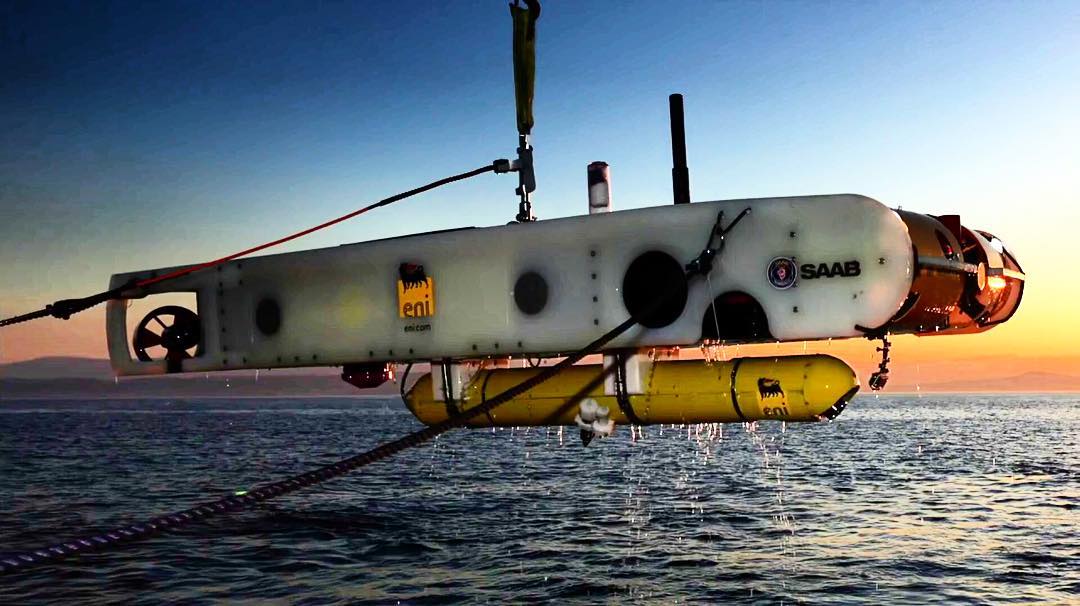
Eni's Clean Sea technology to debut in Mediterranean, West Africa

MILAN -- Clean Sea, proprietary technology designed by Eni's research laboratories, will be used for the first time for marine environmental monitoring and offshore asset inspection in the Mediterranean region and West Africa.

Clean Sea is the result of one of #Eni’s most recent R&D projects, focusing on environmental characterization and protection. Clean Sea ensures improved marine environmental protection by enhancing the quality and quantity of monitored data, and as it can be operated from conventional supply vessels, it offers a #costeffective option with respect to conventional monitoring technologies. Clean Sea can be used in #marineenvironments whenever accurate inspection and monitoring of water quality is required.

Clean Sea, which has been tested in many marine environments, is an advanced underwater vehicle characterized by multi-tasking interchangeable sensors optimized in a single integrated assembly, rather than several dedicated tools. In addition, Clean Sea has the capability to change its mission strategy in real time, as a function of sensor response, optimizing monitoring duration and minimizing cost.

#CleanSea can be operated in either AUV (Autonomous Underwater Vehicle) or ROV (Remotely Operated Vehicle: surface controlled) mode and is therefore more versatile than ROV based technologies.

Eni will establish two logistics bases, one in #Angola for #WestAfrica and the other in #Sicily for the #Mediterranean region, with a dedicated operative team to cover worldwide routine
activity.

In the #Mediterraneanbasin, Clean Sea will be operated by Enimed in Gela. Starting from the first quarter of 2016, two teams will be in charge of the maintenance and operation of the vehicle to provide underwater support services across the Mediterranean Sea. Planned operations include routine sealine inspections and seabed and seawater samplings for environmental monitoring.

Source:worldoil.com

Friday, March 4, 2016

KARYA ILMIAH PELUANG BISNIS
“ BISNIS RENTAL MOTOR”

Logo amikom baru


DI SUSUN
UNTUK MEMENUHI PERSYARATAN TUGAS AKHIR KULIAH
LINGKUNGAN BISNIS

OLEH :

DIAN FAQIH HERMAWAN
15.11.9229
S1TI-11

PROGRAM STUDI TEKNIK INFORMATIKA (TI)
Abstrak
Bisnis rental motor pada dasarnya sama dengan rental mobil. Perbedaan yang paling mencolok hanya pada harga sewanya saja. Bisnis rental ini mempunyai prospek yang bagus. Ada beberapa hal yang perlu di perhatikan, yaitu perkembangan yang terjadi di dunia bisnis dan industri, menyebabkan para pelaku usaha sekaligus orang-orang yang terkait dengan kepentingan mereka, meningkat mobilitasnya. Sehingga peran-serta perusahaan-perusahaan penyewaan mobil dan motor menjadi besar artinya, terutama didasari atas kenyataan bahwa bagi beberapa kelompok orang, menggunakan mobil atau motor secara menyewa, diperhitungkan akan lebih efisien daripada membeli.

Tahun ini sudah ada 7.000 unit sepeda motor Honda yang disewakan untuk sejumlah perusahaan di Jakarta dan Tangerang. "Kebanyakan dari perusahaan perbankan, medical representatif, dan juga delivery makanan," tutur salah satu perusahaan rental motor, Motorent, di jakarta. Yang membuat Motorent berkembang pesat, adalah karena jasa penyewaan motor baru ini terbilang cukup bersahabat dengan kantong.


Isi

          Memulai usaha ini pun, seharusnya tidak melulu bergantung pada kondisi keuangan pribadi yang ingin kita sisihkan sebagai modal. Bila kita tidak punya modal finansial, Anda dapat mengajak orang lain yang bukan saja punya uang, tapi tentunya juga berminat dalam bisnis sewa-menyewa kendaraan. Mulailah dengan menggunakan 1 - 3 motor saja dulu, dan itu pun tidak harus punya Anda semua. Anda bisa menyosialisasikan pada orang-orang dekat bahwa Anda memiliki bisnis yang bisa dimanfaatkan untuk meraup keuntungan dari motor mereka yang penggunaannya kurang efektif. Berilah pencerahan bahwa dengan menitipkan pada Anda, motor yang selama ini hanya parker di garasi, akan dapat membiaya dirinya sendiri melalui uang sewa.

Anda harus giat mengajukan penawaran-penawaran kerjasama pada berbagai institusi bisnis. Misalnya, kalau Anda tinggal di Bali, Jogya atau daearah-daerah wisata lainnya, Anda bisa mengadakan kerjasama dengan berbagai hotel atau perusahaan tour and travel yang memungkinkan perusahaan Anda dipercaya untuk menangani urusan penyedia jasa kendaraan yang diperuntukkan bagi tamu-tamu hotel tersebut. Selain itu, rental motor memberikan pilihan lain kepada tamu-tamu mereka yang mungkin ingin menikmati suasana sekitar dengan menunggangi sepeda motor.
Sebagai contoh, untuk liburan di Bali banyak alternatif transport yang bisa dipilih. Salah satunya dengan sewa sepeda motor atau rental motor dengan sistem sewa harian. Website Bali motor menyediakan banyak pilihan motor yang bisa disewa baik untuk motor matic ataupun manual seperti Honda Vario, Yamaha Mio, Honda Supra, Yamaha Jupiter MX, Honda Tiger dan lain-lain. Selain harganya yang jauh lebih murah , Anda akan terbebas dari kemacetan yang banyak terjadi di daerah Kuta, Legian dan Seminyak. Dengan ukuran yang lebih kecil dan lincah, motor bisa memberikan keleluasaan dan kecepatan. Dengan layanan GRATIS untuk antar dan ambil motor dan mobil baik itu di bandara Ngurah Rai, kuta, Legian, Seminyak, Jimbaran, tentu saja akan semakin memberikan kemudahan bagi konsumen. Sedangkan untuk wilayah Nusa Dua, Sanur, Denpasar pihak penyedia jasa hanya mengenakan biaya Rp. 15.000 sekali jalan. Syarat sewa biasanya hanya dimintakan alamat di Bali (tempat menginap), KTP, telp rumah / kantor, foto (difoto saat ambil motor) dll.

Perlukah mobil atau motor sewaan diasuransikan? Wajib! Jangankan mobil atau motor sewaan, milik pribadi pun seyogyanya diasuransikan mengingat faktor keamanan dewasa ini yang semakin rawan. Risiko dapat terjadi kapan saja, apalagi kalau kendaraan sewaan itu dipakai oleh segala macam tipe orang yang tidak kita ketahui, sembronokah, cerobohkah, piawaikah atau..?  Sebelum Anda benar-benar terjun total, perhatikan juga faktor persaingan. Lalu ciptakan keunggulan spesifik apa yang dapat ditawarkan pada calon pelanggan, yang tidak ditawarkan orang lain. Sehingga jelas alasannya, mengapa pelanggan harus datang ke Anda untuk menyewa, dan bukan datang ke pesaing Anda.

Dari kebutuhan tersebut, merebaklah peluang untuk menjalankan bisnis persewaan kendaraan bermotor khusus roda dua. Ditambah lagi dengan macetnya lalu lintas perkotaan, motor merupakan salah satu solusi alternatif yang terbaik.

Referensi

KARYA ILMIAH PELUANG BISNIS
“ BISNIS BUDIDAYA LELE”

Logo amikom baru


DI SUSUN
UNTUK MEMENUHI PERSYARATAN TUGAS AKHIR KULIAH
LINGKUNGAN BISNIS

OLEH :

DIAN FAQIH HERMAWAN
15.11.9229
S1TI-11

PROGRAM STUDI TEKNIK INFORMATIKA (TI)
ABSTRAK
     Lele merupakan jenis ikan konsumsi air tawar dengan tubuh memanjang dan kulit licin. Di
Indonesia ikan lele mempunyai  beberapa nama daerah, antara lain: ikan kalang (Padang),
ikan maut (Gayo, Aceh), ikan pintet (Kalimantan Selatan), ikan keling (Makasar), ikan cepi
(Bugis), ikan lele atau lindi (Jawa Tengah). Sedang di negara lain dikenal dengan nama mali
(Afrika),  plamond (Thailand), ikan keli  (Malaysia),  gura magura (Srilangka),  ca tre trang
(Jepang). Dalam bahasa Inggris disebut pula catfish,  siluroid, mudfish dan walking catfish.
Ikan lele tidak pernah ditemukan di air payau atau air asin.
      Habitatnya di sungai dengan arus air yang perlahan, rawa, telaga, waduk, sawah yang
tergenang air. Ikan lele bersifat noctural, yaitu aktif bergerak mencari makanan pada malam
hari. Pada siang hari, ikan lele berdiam diri dan berlindung di tempat-tempat gelap.Di alam
ikan lele memijah pada musim penghujan. Ikan lele banyak ditemukan di benua Afrika dan
Asia. Dibudidayakan di Thailand, India, Philipina dan Indonesia.  Di Thailand produksi ikan
lele  ?  970  kg/100m2/tahun.  Di  India  (daerah  Asam)  produksinya  rata-rata  tiap  7  bulan
mencapai  1200 kg/Ha.
     Klasifikasi ikan lele menurut Hasanuddin Saanin dalam Djatmika et al (1986) adalah:
Kingdom : Animalia
Sub-kingdom : Metazoa
 Phyllum : Chordata
Sub-phyllum : Vertebrata
Klas : Pisces
Sub-klas : Teleostei
Ordo : Ostariophysi
Sub-ordo : Siluroidea
Familia : Clariidae
Genus : Clar 
     
  ISI 
Peluang  usaha   budi  daya  ikan  lele  merupakan  salah  satu  peluang  usaha  yang  cukup 
diperhitungkan saat ini.
Apabila kita perhatikan banyak terdapat  penjual pecel lele yang memerlukan pasokan ikan
lele setiap harinya, hal inilah yang membuat permintaan ikan tersebut menjadi semakin tinggi
di pasaran dan membuka potensi peluang bisnis yang cukup menjanjikan. Ternak ikan lele
relatif  lebih mudah apabila dibandingkan dengan ikan air tawar lainnya seperti ikan mas atau
mujair karena lebih tahan terhadap penyakit maupun kondisi lingkungan.
     Berikut ini adalah gambaran secara umum tentang cara budidaya ikan lele:
*Pembenihan Lele.
     Adalah budidaya lele untuk menghasilkan benih sampai berukuran tertentu dengan cara
mengawinkan induk jantan dan betina pada 
kolam-kolam khusus pemijahan. Pembenihan lele mempunyai  prospek yang bagus dengan
tingginya konsumsi lele serta banyaknya
 usaha pembesaran lele.
* Sistem Budidaya
     Terdapat 3 sistem pembenihan yang dikenal, yaitu :
1. Sistem Massal.  Dilakukan dengan menempatkan lele jantan dan betina dalam satu
kolam dengan perbandingan tertentu.
            Pada sistem ini induk jantan secara leluasa mencari pasangannya untuk diajak kawin
dalam sarang  pemijahan,sehingga  sangat  tergantung  pada  keaktifan  induk  jantan
mencari pasangannya.
2.  Sistem Pasangan. Dilakukan dengan menempatkan induk jantan dan betina pada satu
kolam khusus. Keberhasilannya ditentukan oleh ketepatan menentukan pasangan yang
cocok antara kedua induk.
3.  Pembenihan Sistem Suntik (Hyphofisasi).
             Dilakukan dengan merangsang lele untuk memijah atau terjadi ovulasi  dengan 
suntikan ekstrak kelenjar Hyphofise,yang terdapat di sebelah bawah otak besar. Untuk
keperluan ini harus ada ikan sebagai donor kelenjar Hyphofise yang juga harus dari
jenis lele.
*Tahap proses budidaya
     A. Pembuatan kolam.                                                                                                        
Ada dua macam/tipe kolam, yaitu bak dan kubangan (kolam galian). Pemilihan tipe
kolam tersebut sebaiknya disesuaikan dengan lahan yang tersedia. Secara teknis baik
pada tipe bak maupun tipe galian, pembenihan lele harus mempunyai :
Kolam tandon. Mendapatkan masukan air  langsung dari  luar/sumber  air.  Berfungsi
untuk pengendapan lumpur, persediaan air, dan penumbuhan plankton. Kolam tandon
ini merupakan sumber air untuk kolam yang lain.
Kolam pemeliharaan induk. Induk jantan dan bertina selama masa pematangan telur
dipelihara pada kolam tersendiri yang sekaligus sebagai tempat pematangan sel telur
dan sel sperma.
Kolam Pemijahan. Tempat perkawinan induk jantan dan betina. Pada kolam ini harus
tersedia sarang pemijahan dari  ijuk, batu bata,  bambu dan lain-lain sebagai  tempat
hubungan induk jantan dan betina.
Kolam Pendederan.  Berfungsi  untuk membesarkan anakan yang telah menetas dan
telah berumur  3-4 hari.  Pemindahan dilakukan pada umur  tersebut karena anakan
mulai  memerlukan pakan,  yang sebelumnya masih menggunakan cadangan kuning
telur induk dalam saluran pencernaannya.
     B.Pemilihan induk
Induk jantan mempunyai tanda :
- tulang kepala berbentuk pipih
- warna lebih gelap
- gerakannya lebih lincah
- perut ramping tidak terlihat lebih besar daripada punggung
- alat kelaminnya berbentuk runcing.
Induk betina mempunyai bertanda :
- tulang kepala berbentuk cembung
- warna badan lebih cerah
- gerakan lamban
- perut mengembang lebih besar daripada punggung alat kelamin berbentuk bulat.
     C.Persiapan lahan.
     Proses pengolahan lahan (pada kolam tanah) meliputi :
- Pengeringan. Untuk membersihkan kolam dan mematikan berbagai bibit penyakit.
-  Pengapuran. Dilakukan dengan kapur Dolomit  atau Zeolit  dosis 60 gr/m2 untuk
mengembalikan keasaman tanah dan mematikan bibit penyakit yang tidak mati oleh
pengeringan.
-  Perlakuan TON (Tambak Organik Nusantara).  untuk menetralkan berbagai  racun
dan gas berbahaya hasil pembusukan bahan organik sisa budidaya sebelumnya dengan
dosis  5  botol  TON/ha  atau  25  gr  (2  sendok  makan)/100m2.  Penambahan  pupuk
kandang juga dapat dilakukan untuk menambah kesuburan lahan.
- Pemasukan Air. Dilakukan secara bertahap, mula-mula setinggi 30 cm dan dibiarkan
selama 3-4 hari untuk menumbuhkan plankton sebagai pakan alami lele.
     Pada tipe kolam berupa bak, persiapan kolam yang dapat dilakukan adalah :
- Pembersihan bak dari kotoran/sisa pembenihan sebelumnya.
- Penjemuran bak agar kering dan bibit penyakit mati. Pemasukan air fapat langsung
penuh dan segera diberi perlakuan TON dengan dosis sama
     D.Pemijahan.
Pemijahan adalah proses pertemuan induk jantan dan betina untuk mengeluarkan sel
telur  dan sel  sperma.  Tanda induk jantan siap kawin yaitu alat  kelamin berwarna
merah. Induk betina tandanya sel telur berwarna kuning (jika belum matang berwarna
hijau). Sel telur yang telah dibuahi menempel pada sarang dan dalam waktu 24 jam
akan menetas menjadi anakan lele.
     E.Pemindahan.
Cara pemindahan :
-  kurangi air di sarang pemijahan sampai tinggi air 10-20 cm.
- siapkan tempat penampungan dengan baskom atau ember yang diisi dengan air di 
sarang.
- samakan suhu pada kedua kolam
- pindahkan benih dari sarang ke wadah penampungan dengan cawan atau piring.
- pindahkan benih dari  penampungan ke kolam pendederan dengan hati-hati  pada 
malam hari, karena masih rentan terhadap tingginya suhu air.
     F.Pendederan.
Adalah pembesaran hingga berukuran siap jual, yaitu 5 – 7 cm, 7 – 9 cm dan 9 – 12
cm dengan harga berbeda. Kolam pendederan permukaannya diberi pelindung berupa
enceng gondok atau penutup dari  plastik untuk menghindari naiknya suhu air yang
menyebabkan lele mudah stress. Pemberian pakan mulai dilakukan sejak anakan lele
dipindahkan ke kolam pendederan ini.
*Manajemen pakan.
     Pakan anakan lele berupa :
- pakan alami berupa plankton, jentik-jentik, kutu air dan cacing kecil (paling baik)
dikonsumsi pada umur di bawah 3 – 4 hari.
- Pakan buatan untuk umur diatas 3 – 4 hari. Kandungan nutrisi harus tinggi, terutama
kadar proteinnya.
- Untuk menambah nutrisi  pakan, setiap pemberian pakan buatan dicampur dengan
POC NASA dengan dosis  1 – 2 cc/kg pakan (dicampur  air  secukupnya),  untuk
meningkatkan  pertumbuhan  dan  ketahanan  tubuh  karena  mengandung  berbagai
unsur mineral penting, protein dan vitamin dalam jumlah yang optimal.
*Manajemen air.
     Ukuran kualitas air dapat dinilai secara fisik :
- air harus bersih
- berwarna hijau cerah
- kecerahan/transparansi sedang (30 – 40 cm).
     Ukuran kualitas air secara kimia :
- bebas senyawa beracun seperti amoniak
- mempunyai suhu optimal (22 – 26 0C).
     Untuk menjaga kualitas air agar selalu dalam keadaan yang optimal, pemberian pupuk
TON sangat  diperlukan.  TON yang mengandung unsur-unsur  mineral  penting,  lemak,
protein,  karbohidrat  dan asam humat  mampu menumbuhkan dan menyuburkan pakan
alami yang berupa plankton dan jenis cacing-cacingan, menetralkan senyawa beracun dan
menciptakan ekosistem kolam yang seimbang. Perlakuan TON dilakukan pada saat oleh
lahan dengan cara dilarutkan dan di siramkan pada permukaan tanah kolam serta pada
waktu  pemasukan  air  baru  atau  sekurang-kurangnya  setiap  10  hari  sekali.  Dosis
pemakaian TON adalah 25 g/100m2.
*Manajemen Kesehatan
    Pada dasarnya,  anakan lele yang dipelihara tidak akan sakit jika mempunyai ketahanan 
tubuh  yang  tinggi.  Anakan  lele  menjadi  sakit  lebih  banyak  disebabkan  oleh  kondisi
lingkungan (air) yang jelek. Kondisi air yang jelek sangat mendorong tumbuhnya berbagai
bibit  penyakit  baik  yang  berupa  protozoa,  jamur,  bakteri  dan  lain-lain.  Maka  dalam
menejemen kesehatan pembenihan lele,  yang lebih penting dilakukan adalah penjagaan
kondisi air dan pemberian nutrisi yang tinggi. Dalam kedua hal itulah, peranan TON dan
POC  NASA sangat  besar.  Namun  apabila  anakan  lele  terlanjur  terserang  penyakit,
dianjurkan untuk melakukan pengobatan yang sesuai. Penyakit-penyakit yang disebabkan
oleh  infeksi  protozoa,  bakteri  dan  jamur  dapat  diobati  dengan  formalin,  larutan  PK
(Kalium Permanganat) atau garam dapur. Penggunaan obat tersebut haruslah hati-hati dan
dosis yang digunakan juga harus sesuai
REFERENSI
http://budidaya-di.blogspot.com/2009/11/budidaya-ikan-lele-p