Wednesday, May 25, 2016

Cairn India CEO quits after record quarterly loss
MUMBAI, India (Bloomberg) -- Cairn India Ltd. said its CEO Mayank Ashar resigned citing personal reasons, just a month after the nation’s largest private oil producer posted its biggest quarterly loss.
Ashar will step down on June 5 and will be replaced by CFO Sudhir Mathur as interim head of the company, Cairn India said in a stock exchange filing on Friday. Ashar, who took charge in October 2014, oversaw the company amid the worst ever slide in oil prices and an ongoing process of merger with parent Vedanta Ltd. In January, Cairn India said the merger will take at least six more months.
“This is definitely unsettling,” said Amit Agarwal, analyst at SBI Capital Markets Ltd. “He has given personal reasons but there is no clarity beyond that.”
Ashar did not respond to an email seeking comment.
Cairn last month reported a group net loss of 109.5 billion rupees ($1.6 billion) in the three months ended March, that was wider than a mean loss estimate of 915.4 million rupees. The company’s shares have fallen 31% in the past year following the slump in oil prices and uncertainty over the merger with Vedanta, which was announced in June. Brent oil has slipped 25% in the past 12 months.
“As it is, the stock has got hammered last few weeks and there will be some uncertainty now, which will be negative for the stock in the near term,” SBI Capital’s Agarwal said.

Friday, May 20, 2016

Exxon, Total, Chevron in talks with Pemex on Gulf prospects
MEXICO CITY (Bloomberg) -- Petroleos Mexicanos is in talks with Exxon Mobil Corp., Total and Chevron Corp. as Mexico’s struggling state-run oil producer seeks partners to develop deepwater crude in the Gulf of Mexico.
Pemex may also start discussions with Oslo-based Statoil ASA, according to company press officials who asked not to be named because of policy. Pemex seeks Areas of Mutual Interest agreements to evaluate whether the companies have opportunities to work together in offshore areas.
The talks would indicate the world’s oil majors are interested in partnering with Pemex to produce the country’s underdeveloped crude reserves or bid with Mexico’s state-owned operator in the country’s first-ever deepwater auctions in December. Pemex, which deferred investments in deepwater fields this year amid a $5.5-billion budget cut, has reiterated that it seeks to partner with the world’s largest producers to develop Mexico’s crude reserves, estimated by the country’s oil regulator at the equivalent of 10.24 Bbbl of crude at the end of last year.
"They will use the tools in the energy reform to do this," Nymia Almeida, a senior credit officer for Moody’s, said at a conference in New York, when asked about Pemex forming partnerships and selling assets, which the company intends to do. "Any deal would be better than none, even if it starts little by little."
Hakon Fonseca Nordang, head of communication for Statoil in the U.S. and Mexico, declined to comment on any discussions, saying that Statoil and Pemex have for years had a General Cooperation Agreement involving research and technology exchange between the two companies. Scott Silvestri, an Exxon spokesman, declined to comment, as did Isabel Ordonez, a spokeswoman for Chevron in Latin America.
Deepwater Auction
Mexico hopes to raise $44 billion in investment in its first-ever sale of deepwater areas in the Gulf of Mexico, scheduled for Dec. 5. The country will auction 10 areas in the Perdido area near the maritime border with the U.S. and in the southern gulf’s Cuenca Salina.
Seventy-six percent of the country’s prospective oil resources are located in the deep waters of the Gulf of Mexico, according to Energy Minister Pedro Joaquin Coldwell. Pemex, Statoil, Chevron and Exxon are among 16 companies that are in the process to qualify to bid in the deep water auctions.

Shell said to start talks with buyers for North Sea asset sales
THE HAGUE (Bloomberg) -- Royal Dutch Shell is in talks with potential buyers for some North Sea assets, mostly fields it got this year as part of the record acquisition of BG Group, according to people familiar with the matter.
The Anglo-Dutch energy giant has been in talks with companies including privately held chemical producer Ineos Group AG and Neptune Oil & Gas, set up by former Centrica Plc chief Sam Laidlaw, the people said, asking not to be identified as the information is private. Shell is seeking to sell a package of assets and is talking with companies to gauge their interest before a formal sale process is launched, the people said. No final decision has been made and Shell may decide to retain the properties, they said.
Europe’s biggest oil company is planning to raise $30 billion from asset sales in three years after the $54-billion acquisition of BG increased debt and lowered its credit rating. While the move made Shell the world’s second-biggest oil company by market value, it also brought it properties in areas like the North Sea where costs are high. Crude continues to trade below $50, making it difficult for Shell to sell oil fields at what it thinks is a good price.
“Shell continuously evaluates opportunities for its global portfolio, in line with our business strategy,” a company spokesman said. “A review of all assets, including those in the North Sea, is underway as part of our commitment to the $30-billion asset sale program.”
A representative for Neptune didn’t respond to calls and emails requesting comment. A spokesman for Ineos couldn’t be reached by phone or email.
BG operated oil and gas assets in the UK North Sea including the Armada project and the Everest and Lomond fields, according to the company’s website. It also had stakes in fields operated by others, including Nexen’s Buzzard and the Total SA-operated Elgin and Franklin projects, as well as some offshore pipelines.
n the UK North Sea, including the Brent project, oil from which is used to set the global price benchmark, according to its website.
“We are looking at various packages in the upstream,” Shell CFO Simon Henry told analysts May 4. “We are working, sometimes with advisers, on a series of packages. But we’re not about to jump into fire sales in a market which is clearly weak at the moment because of the $45 oil price.”
Brent crude was at about $59/bbl the day before Shell announced the BG acquisition in April last year. Prices dropped to below $40 when the deal was completed in mid-February and remain under $50.
The slump in prices over the last two years has forced Shell and other oil companies to shrink their business, sell assets, defer and close projects and eliminate staff. Some of the cutbacks have happened in the UK North Sea, where operating costs remain high.
The BG acquisition pushed up Shell’s net debt to about $70 billion at the end of March, making it Europe’s most indebted non-financial company. Its gearing—or net debt to total capital—increased to above 26% from 14% at the end of last year.
Assets linked to Shell’s interests in Trinidad & Tobago and stakes in oil and gas fields in India may be on the block, people familiar with the matter said in March.

Wednesday, May 18, 2016

France’s proposed shale-gas ban isn’t workable, Total CEO says
PARIS (Bloomberg) -- Total SA CEO Patrick Pouyanne said plans to ban imports of U.S. shale gas to France may be unworkable.
“I don’t know how it would be possible to do it,” Pouyanne said Wednesday at a hearing of the French Senate. “The gas is liquefied in the U.S., and shale and conventional gas are mixed together in pipelines.” You can’t then separate them, he said.
Energy and Environment Minister Segolene Royal said this month that she will “examine from a legal standpoint” ways to ban imports of shale gas, and has asked Electricite de France SA and Engie SA to import only conventional gas. France barred fracing in 2011 on environmental grounds. Houston-based Cheniere Energy Inc. has contracts to deliver LNG to Engie, EDF and Total.
Re-gasification units in Europe are running at just 25% of capacity, and will attract U.S. LNG imports, Pouyanne said. “We’ll buy American gas in one year or two. We plan to import it in Europe or elsewhere in the world.”
“The price of gas in Europe has dropped because of American LNG,” Pouyanne said.

Norway offers thirteen companies production licenses in Barents Sea
STAVANGER, Norway -- Norway’s Ministry of Petroleum and Energy has offered new production licenses to thirteen companies in the 23rd licensing round on the Norwegian Continental Shelf. All ten production licenses are located in the Barents Sea.
The offers were issued following the authorities’ assessment of applications from 26 companies.
When the 23rd licensing round was announced in January 2015, it marked 50 years since the announcement of the very first licensing round on the NCS. For the first time since 1994, new exploration acreage was made available in the southeastern Barents Sea.
Sissel Eriksen, director of exploration, Norwegian Petroleum Directorate, is pleased with the present results of the latest licensing round. “I am eagerly awaiting the result of the first exploration well,” she said.
Three production licenses were awarded in the new area in the southeastern Barents Sea. The authorities have prepared binding work programs that include a requirement for four exploration wells within three years in the three production licenses in the southeastern Barents Sea. Eriksen is hopeful that the first exploration well will be in place as early as next year.
In addition to the three production licenses in the southeastern Barents Sea, Eriksen drew attention to the new blocks awarded in the area surrounding the Alta and Wisting discoveries, with a view to strengthening the resource base for future developments.
She also emphasized that the areas awarded are important in the search for more knowledge about the Barents Sea generally, for the benefit of further exploration of the area.

Nine Energy completes 124-stage well in Utica shale
HOUSTON -- Nine Energy Service successfully completed 124 perforated stages in an 18,544 ft lateral (27,034 ft TMD) in Guernsey County, Ohio, for Eclipse Resources, a premier independent E&P company in the Appalachian basin.
In one of the most complex wells ever completed by either company, Nine’s Wireline Division worked directly with Eclipse to design the plug and perf system through Cerebus Well Modeling software, enabling more effective planning and deployment of cable-conveyed tools. Nine completed all 124 stages in 23.5 days without any non-productive time.
“In the current low commodity environment, operators like Eclipse are targeting their core acreage and remain focused on optimizing development with longer laterals and shorter spacing,” said Nick Pottmeyer, V.P. of completions technology, North America for Nine. “Longer laterals are proving to be a more effective way to develop acreage. Increased well costs to drill further can be justified by the improved production ranges and return on revenue.”
Kyle Bradford, completions manager for Eclipse Resources added, “Nine was the only wireline company that we considered. We knew with such a technical well, there would be a number of challenges and we needed a partner that we could rely on to execute at the wellsite and who could quickly address any problems.

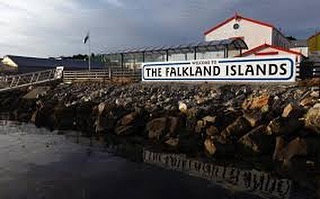
Rockhopper confirms potential of Falklands basin oil discovery
LONDON (Bloomberg) -- Rockhopper Exploration confirmed potential oil resources in a discovery in the Falklands basin, sending its shares higher.
An independent audit showed that the best estimate of contingent resources—also known as 2C resources—at the Sea Lion complex came in at 517 MMbbl, of which London-based Rockhopper’s share is 258 MMbbl, it said Tuesday in a statement.
Today’s announcement is higher than the 482 MMbbl Bank of Montreal was expecting.
“It adds to confidence on the prospectivity of the region,” David Round, an analyst at BMO, said by email. “But there remain a number of hurdles, namely the oil price, before the resources can be commercialized.”
Shares in Rockhopper gained as much as 6.2% to trade at 38.75 pence a share in London, the highest in two weeks. They were 3.4% higher as of 9:17 a.m. Premier Oil Plc, a London-based explorer with a 60% stake in Sea Lion, gained 2.9% to 79.75 pence a share.
“The current size of Sea Lion at over 500 MMbbl is good to see, helping confirm a significant second phase beyond the current development,” Daniel Slater, research director at Arden Partners Plc, said in a note.
The 2010 Sea Lion oil discovery was the first off the Falklands, the south Atlantic archipelago which Margaret Thatcher fought to keep British in 1982. No discovery there has yet been commercially productive

BP doubles its interest in Culzean field in the North Sea
LONDON -- BP announced today it has doubled its interest in the Culzean development in the UK Central North Sea, following its acquisition of an additional 16% interest from JX Nippon.
The acquisition increases BP’s interest in the development from 16% to 32%.
“We are pleased to have deepened our interest in Culzean and we look forward to helping Maersk make this important central North Sea development a success,” said Mark Thomas, BP regional president, North Sea region. “This is a challenging time for the industry and we must continue to work together to ensure that when developments like Culzean, or other projects such as BP’s Quad 204 and Clair Ridge, come online they can be run as efficiently as possible.”
The Maersk-operated Culzean field development, which was sanctioned at the end of August last year, is expected to produce enough gas to meet 5% of total UK demand at peak production in 2020/21.
“BP has been focusing and refreshing its North Sea portfolio by bringing new fields into production, redeveloping and renewing existing producing facilities and divesting some of its more mature or less strategic assets,” Thomas added. “Our deepening in Culzean further demonstrates our commitment to supporting the development of another UK field for the future.”
Discovered in 2008, the gas condensate field has resources estimated at 250-300 MMboe. Production is expected to start in 2019 and continue into the 2030s, with plateau production of 60,000-90,000 boepd.

Algeria signs oil, gas deal as OPEC member boosts sales
AMMAN, Jordan (Bloomberg) -- Algeria will supply oil and other energy products to Jordan for the first time under a memorandum of understanding signed on Monday, as the OPEC member seeks to diversify sales after years of stagnating crude production.
Algeria’s state-run Sonatrach Group will start shipping liquefied natural gas and liquefied petroleum gas to Jordan in September, followed by crude oil, Algerian Energy Minister Salah Khebri said in an interview in Amman. Sonatrach and National Electric Power Co. of Jordan should reach a final agreement in the next few weeks, he said, without specifying shipment volumes. Sonatrach will also explore for oil and gas in Jordan.
“This is the first time that we are going to get fuel and gas from Algeria,” Hasan Hiari, head of the natural gas department at Jordan’s Ministry of Energy & Mineral Resources, said in a separate interview in Amman. "We are keen on diversifying our energy sources."
Algeria, Africa’s biggest natural gas producer, has invited international companies to help develop its oil and gas fields as Sonatrach has struggled to raise production after a corruption probe at the company and a deadly al-Qaeda terrorist attack in 2013 at the In Amenas gas field. The nation operated 55 oil rigs in April, an increase in each month since November, according to Baker Hughes Inc. Algeria pumped 1.1 MMbpd of crude in April, its production little changed since 2013.
Demand boost
Oil-producing nations increasingly face the challenge of meeting higher demand rather than cutting supply to support prices. The International Energy Agency on May 12 boosted its forecast for world oil demand this year by 100,000 bpd, and Goldman Sachs Group Inc. said on May 15 that the oil market has flipped to a deficit in output sooner than it expected. Benchmark Brent crude has climbed 31% this year as supplies were tightened by a decline in U.S. drilling, wildfires in Canada and disruptions in Nigeria.
Algeria, the ninth-biggest member of the Organization of Petroleum Exporting Countries, plans to raise crude output by 5% in 2016 and offer energy-exploration rights to foreign companies, Salah Mekmouche, Sonatrach V.P. of exploration and production, said in an interview in Algiers in December. Natural gas pipeline flows from Algeria, the European Union’s third-biggest supplier, into Italy reached a three-year high in April, data from Italian grid Snam Rete Gas SpA show.
Jordan, which has almost no energy resources of its own, is also looking at solar, wind and nuclear power for future energy needs. By 2025, 48 percent of the nation’s electricity will be generated by nuclear reactors, up from 4% today, Prime Minister Abdullah Ensour said Monday at an energy conference in Amman. It plans to have 500 megawatts of solar- and wind-power capacity operational by the end of this year.

New North Sea beckons oil producers off Canada's eastern coast
CALGARY (Bloomberg) -- A change to an obscure shipping law is helping draw major oil companies to an area off Canada’s east coast that may rival the North Sea for its production potential.
Exxon Mobil Corp., Chevron Corp., Statoil ASA, BG Group Plc and BP Plc are among the companies that committed to spend C$1.2 billion ($934 million) in auctions last November by the province of Newfoundland and Labrador for seven parcels off the coast. Now the government is adding 13 new parcels in an auction set for this November, as the removal of a decades-old shipping restriction opened the area to more vessels seeking oil and natural gas.
In the past, the sole domestic seismic ship used to locate potential oil deposits was operated by a Canadian company, Geophysical Services Inc., or GSI. That’s because the nation’s maritime law gave domestic businesses the ability to block the use of foreign-owned vessels. That barrier was removed in 2012, and since then a small squadron of ships has been collecting offshore data on more than 82,000 km2 (32,000 mi2) in partnership with the regional government. That data, available to companies in the next auction, more than doubles the area for exploration. Last year, five ships were collecting data off the province’s coast.
“What we are seeing here is similar to North Sea Norway in terms of its potential,” said Ed Martin, the former CEO of Nalcor Energy, the province’s oil company, who spearheaded efforts to open new offshore areas and cited Norway as a model.
The exploration blocks awarded last year may hold as much as 12 Bbbl of oil, several times bigger than the province’s biggest field Hibernia, according to Nalcor. The 13 new parcels to be auctioned are in the Eastern Newfoundland and Jeanne d’Arc areas. The province is expected to offer as much as 2% more area annually thereafter.
Norway, pumping about nine times more offshore crude than Newfoundland and Labrador, has drilled eight times as many exploratory wells off its coast, according to Nalcor data. Oil has helped make the Nordic country Europe’s second richest per capita behind Luxembourg, according to World Bank data.
That promise is spurring Canada’s energy hopes even after prices cratered. Crude’s drop from more than $100/bbl in 2014 to below $30 earlier this year hit the provincial economy hard. Offshore royalties account for just 9% of revenue in the Newfoundland Labrador 2016-2017 budget, down from 37% two years ago.
Crude rout
While results from the first auction show promise, the price of oil remains low at around $45 and drillers have trimmed their budgets.
“It’s not an ideal macro situation for Newfoundland expansion,” said Mark Oberstoetter, lead analyst for upstream research at Wood Mackenzie in Calgary. “We are seeing exploration spending activity cut around the world.”
BP and Chevron declined to comment on their interest in the area. Statoil, Exxon and BG’s owner Royal Dutch Shell Plc didn’t immediately respond to e-mails or phone calls seeking comment.
Similar to the U.S. Jones Act, that old shipping law, known as the Coasting Trade Act, was written to protect Canadian-flagged vessels from foreign competitors in domestic waters. Included in its remit were seismic vessels, even though only one was registered in Canada before 2011, according to PennEnergy Research, which tracks ships. That vessel belonged to GSI.
Foreign vessels
Under the law, companies that wanted to use a foreign vessel for testing would have to apply for a license. Canadian-based firms could object, often blocking approval. That occurred six times between 2000 and 2006, with GSI the blocking company, according to Wes Foote, Newfoundland’s assistant deputy minister for petroleum development.
In 2011, Nalcor partnered with Asker, Norway-based TGS Nopec Geophysical Co ASA and Oslo-based Petroleum Geo-Services ASA to invest in a multi-client 2D seismic survey of the province’s waters. The plan was hindered by the Coasting Trade Act, spurring the government to change the law’s wording on seismic vessels.
Not everyone is happy with the changes. Paul Einarsson, GSI’s chairman, said amending the act wasn’t fair because it targeted “our ship only.”
More 2D seismic data was collected in 2014 than any year since the early 1980s, according to the Canada-Newfoundland and Labrador Offshore Petroleum Board.
Offshore waters
Just 5% of Newfoundland and Labrador’s offshore waters are currently licensed to companies. The province’s total offshore area is bigger than Norway’s section of the North Sea, according to Nalcor.
Energy producers now operate three platforms: Hibernia, Terra Nova and White Rose. Combined, they had output of about 70 MMbbl last year, almost half what was produced when output peaked in 2007, provincial data show. The 150,000 bpd, Exxon-led Hebron project is scheduled to start production next year.
“What we see really is almost like a renaissance in Newfoundland and Labrador,” Robert Cadigan, chief executive officer of the Newfoundland and Labrador Offshore Industries Association, a trade association

U.S. drillers idle ten oil rigs for eight week of decline
HOUSTON -- The number of rigs seeking oil fell for an eight consecutive week, Baker Hughes said Friday as the total rig count settled just above 400.
According to the Houston-based service provider, the number of active oil rigs fell 10 to 318, which represents the lowest level since Oct. 23, 2009, when 312 rigs were reported. However, at that time, a far greater number of rigs—725—were seeking gas.
The drop-off in oil-directed drilling led the total rig count to fall nine to 406. The number of rigs seeking gas rose one to 87, while miscellaneous rigs held steady at one. 

Friday, May 13, 2016

Siemens ships first gas turbine package to Abu Dhabi’s Zirku Island oil field

MOUNT VERNON, Ohio -- Siemens has shipped its first Industrial Trent 60 gas turbine generator package from its manufacturing facility in Mount Vernon, Ohio, to Abu Dhabi Marine Operating Company's (ADMA-OPCO) Satah Al-Razboot (SARB) offshore oil field project on Zirku Island.

The shipment will be the first of five Industrial Trent 60 power generation packages to be delivered, installed and commissioned for ADMA-OPCO. The Aeroderivative Gas Turbine (AGT) is the first of three dual fuel units that will be delivered as part of the order that also includes two gas only units.

The Siemens Industrial Trent 60 is the most advanced AGT available today. Generating up to 66 megawatts (MW) of electric power in simple cycle service, at 42% efficiency, the Industrial Trent 60 has established a new benchmark for fuel economy and fuel burn cost savings. It also offers operators fast delivery and installation times.

"As the first High Scale Siemens AGT project in Abu Dhabi, the shipment of this first package is an important milestone in our contribution to the UAE's energy sector," said Dietmar Siersdorfer, CEO of Siemens Middle East and United Arab Emirates. "The SARB offshore oil field project will be a key component of the UAE's economic strength, and we are proud that our advanced turbine technology will be responsible for making it a reality."

Originally developed for use in aviation, AGTs are compact, lighter-weight designs that are ideally suited for power generation in the oil and gas industry. Their high efficiency and fast-start capabilities mean that AGTs also perform well in distributed power generation applications.

ADMA-OPCO's SARB offshore oil field project is being built on Zirku Island, which is located 120 km northwest of Abu Dhabi. The SARB offshore oil field project will have a daily capacity of 100,000 bbl of oil, equivalent to 160,000 200-liter drums, and 35 MMcfg, the amount on which about 6,600 gas buses can run.

The offshore project is being implemented in seven stages and primarily involves the reclamation and construction of two artificial islands, to facilitate drilling works for the extraction of crude oil from the field.

The first installation phase is expected to begin in May 2016: with commissioning on Duel Fuel Operation completed by 2018, and completion of plant commissioning on gas by 2019.


TGS reaches 75% acquisition progress mark on Gigante seismic program

HOUSTON -- TGS has now acquired approximately 141,000 km (75%) of the planned 186,000 km 2D seismic project Gigante, the company said in a statement.

Gigante covers the entire offshore sector of Mexico and ties into TGS' regional 2D seismic grid covering the entire U.S. Gulf of Mexico. Preliminary data results have identified a number of prospective play fairways within a variety of structural provinces.

Delivery of fast track Pre-stack Time data is ongoing with 103,380 km available and approximately 64,000 km of preliminary pre-stack depth available for the Deep Water Bid Round scheduled for Dec. 5, 2016.

In addition, acquisition of multibeam data is 30% complete with preliminary results available. This data is used to identify hydrocarbon seeps on the seafloor and will direct TGS' seafloor coring operations which began on Jan. 22. Coring in the Perdido area is now 100% complete. Seafloor core samples will be analyzed to determine hydrocarbon grade and will be combined with TGS' other geoscience data as part of a comprehensive interpretative study of the region.

These surveys are supported by industry funding.


CNPC to start laying second China-Russia oil pipeline in June

BEIJING (Bloomberg) -- China National Petroleum Corp., the country’s biggest oil and gas producer, will start laying a second domestic oil pipeline in June to allow for increased Russian crude supplies to flow to China’s northeastern city of Daqing.

The project between the Chinese border city of Mohe and Daqing runs parallel to an existing spur off of Russia’s East Siberia-Pacific Ocean crude pipeline. The 942-km (585-mile) line has received construction approval from the National Development and Reform Commission, China’s top economic planner, and is expected to be completed by October 2017, CNPC said in a statement on its website Thursday. The two pipelines will have a combined annual capacity of 30 million metric tons of crude.

“The second oil pipeline will help integrate northeast China’s crude resources, and further improve the safety and reliability of China’s crude oil supplies,” CNPC said in the statement.

The energy relationship between the two neighbors—one of the world’s biggest oil producers next door to the biggest oil user after the U.S.—has continued to deepen since Russia started sending oil supplies to China from the spur off the ESPO pipeline in 2011. Imports of Russian crude last year jumped 28%, placing the country as China’s largest supplier on an annual basis after Saudi Arabia.

Energy Links

Russia’s Transneft will be ready to ship 30 million tons of oil a year to China through the link by Jan. 1, 2018, V.P. Sergei Andronov said in April. Russia’s OAO Rosneft signed a $270-billion deal with CNPC in 2013 to supply about 360 million metric tons of crude to China over 25 years, the second of two crude-supply deals between the countries.

China and Russia are also considering building a second natural gas pipeline to transport as much as 30 Bcm of natural gas annually from West Siberia to China over 30 years. The two signed a $400-billion pact in 2014 to send 38 Bcm of natural gas annually over 30 years to China via East Siberia by as soon as 2018.


CGG GeoSoftware releases EarthModel FT 9.5

PARIS -- CGG GeoSoftware has launched EarthModel FT 9.5, the latest version of its geological modeling software that combines well and seismic data for a better understanding of the reservoir.

Users can determine reservoir properties, such as lithofacies, porosity and permeability, for more accurate modeling results. EarthModel FT combines surface mapping, integrated structural modeling, reservoir property modeling and upscaling all in one package, with direct output to most flow simulators.

EarthModel FT 9.5 offers sandboxes where users can independently explore alternative interpretation scenarios and store them separately from the main project. Changes can be incorporated collaboratively into the central database in real time, allowing for information sharing. 

Additional enhancements for creating 3D geological grids include an enhanced algorithm for improved vertical layering, which minimizes the number of layers needed to make a consistent grid model for use in inversion workflows, driving better model definition and faster inversion results. Users can access velocity data with the results from GeoSoftware’s velocity modeling product, VelPro, which stores data in the shared wells database.

“EarthModel FT provides tools that help our clients mitigate risk and uncertainty,” Robert Chelak, product strategy manager, Reservoir Modeling, CGG GeoSoftware, said. “Reservoir models can be easily and quickly updated when data inputs change, making it easy and natural to evaluate ‘what-if’ scenarios.”


Statoil, Maersk Training sign global drilling simulation agreement

STAVANGER, Norway -- Maersk Training has signed a global framework agreement with Statoil to provide drilling simulation training for the next three years with an option to extend for an additional two years.

Statoil identified a need for advanced drilling simulation training and theory courses in order to reduce the time used for training offshore and to increase safety, operational understanding and efficiency. The courses are aimed at improving communication within and between teams, and they provide the opportunity to practice difficult operations in a safe environment without impacting live operations.

Maersk Training and its partners Oiltec and eDrilling will leverage a portfolio of well-specific cases and events to challenge and develop Statoil employees. There will be a strong focus on best practice for team training and procedural discipline. This will help the drilling and well teams detect issues earlier and be able to react to, or potentially recover from, critical events in the safest and most efficient way.

“Our global presence and state-of-the-art facilities, which include fully immersive simulators to make training as close to reality as possible, means we can provide high-quality learning in a cost-effective manner. We are convinced that this focus will further improve Statoil’s operational efficiency and cut non-productive time,” Claus Bihl, CEO of Maersk Training, said.

Training will primarily take place in Stavanger, Norway, but Maersk Training facilities in Aberdeen, Houston, Rio de Janeiro and Dubai are also setup to accommodate the needs of Statoil.


Saudi Aramco CEO sees ‘significant growth’ in oil output in 2016

DHAHRAN, Saudi Arabia (Bloomberg) -- Saudi Arabia, the world’s biggest oil exporter, plans “significant growth” in output in 2016 and further international expansion, the head of the country’s state-run producer said, even as global oversupply contributed to a drop in crude prices from a year ago.

Saudi Arabian Oil Co., also known as Saudi Aramco, will boost capacity at Shaybah oil field by 33% to 1 MMbpd in the next couple of weeks and will double natural gas production over the next decade, Amin Nasser, CEO, told reporters Tuesday at the company's headquarters in Dhahran, eastern Saudi Arabia.

“Even though it is challenging, it’s still an opportunity for us to grow,” Nasser said of the international expansion plans.

Saudi Arabia is seeking to reduce its reliance on oil sales amid lower prices for its most lucrative export. As part of that effort, the king’s increasingly influential son, Deputy Crown Prince Mohammed bin Salman, wants to sell stock in Saudi Aramco for the first time, creating what could be the world’s largest listed company.

The kingdom is leading Organization of Petroleum Exporting Countries members in a battle for market share against higher-cost producers including U.S. shale drillers. Nasser’s predecessor as CEO, Khalid Al-Falih, who was appointed oil minister Saturday, said he’ll keep Saudi oil policy unchanged.

“Saudi Arabia will maintain its stable petroleum policies. We remain committed to maintaining our role in international energy markets and strengthening our position as the world’s most reliable supplier of energy,” Al-Falih, who remains Aramco’s chairman, said in a statement Sunday, his first day in office.


Saturday, May 7, 2016

New Saudi minister is believer in reform and low oil price

From @Reuters -- It was January 2016 and oil prices had crashed to their lowest in more than a decade.

Saudi Arabia's health minister, Khalid al-Falih, a favourite to take over the oil ministry from his mentor Ali al-Naimi, was not panicking.

Falih told an audience of oil executives, bankers and policymakers at WEF in Davos that the world's top oil exporter might benefit from oil below $30 per barrel.

It could help to speed up reform and restructure the economy, and move Saudi Arabia to a smaller and more effective government and unleash its private sector, he said.

For decades Saudi Arabia, a de facto leader of OPEC, had targeted certain oil price levels. If it did not like the price, it would try to orchestrate a production cut or increase together with its fellow OPEC members.

Things were different this time. For the first time in decades, output cuts were not on the agenda to fix the growing global glut that Saudi Arabia helped create by ramping up supply to drive higher-cost producers such as US shale firms out of the market.

Also for the first time in decades, a royal rather than a non-royal - Deputy Crown Price Mohammed bin Salman - had been appointed a few month earlier to oversee Saudi oil policies and drive the massive change.

Do you not think Prince Mohammed, who is just 30, is doing it all a bit too fast for the generally conservative Saudi society, Falih was asked. "The Royal Highness is very ambitious where he wants Saudi Arabia to be sooner rather later. I can assure you that everybody who works around him is very excited by his vision and energized by his energy," Falih told the audience. "Some people were concerned that we were too slow in the past.. As a former runner, I can tell you that it helps to go through sprints at times to develop your muscular strengths. We are accelerating reform." The writing was on the wall, said the executives leaving Davos. Falih would soon become oil minister reporting to Prince Mohammed, who is quickly turning into the world's most powerful oil figure.

Friday, May 6, 2016

Shah Deniz partners award subsea installation contract

LONDON -- The Shah Deniz consortium has awarded a $1.5-billion contract for the transport and installation of the deeper water subsea production systems for Shah Deniz stage 2 to the BOS Shelf, Saipem Contracting Netherlands and Star Gulf FZCO consortium.

The contract's scope of work includes the management and operation of the new-build subsea construction vessel Khankendi for the transport and installation of the deeper water subsea production systems and subsea structures at all five flanks of the project.

Frank Wilson, BP’s V.P. for the Shah Deniz stage 2 marine and subsea program, said, “The new flagship vessel Khankendi, which is currently under construction by Baku shipyard, will provide essential support for the installation of the stage 2 subsea structures—the biggest subsea production system ever built in the Caspian. The construction of the Khankendi is making excellent progress with the hull strips and bow block already integrated. This major contract award for the installation of subsea production systems underpins our commitment to deploy new advanced subsea production technology for the first time to the Caspian as part of the Shah Deniz stage 2 development.”

The contract scope is planned to be completed by the middle of 2022, with a five-year option to extend the contract to cover the installation of remaining trees, flying leads and jumpers at the east-south, east-north and west-south subsea flanks between 2022 and 2027. The scope also includes the reactivation of the pipe-lay barge Israfil Huseinov and the second pipe-lay installation campaign of the deeper water flowlines in 2019.

Work on the Shah Deniz stage 2 and South Caucasus pipeline expansion (SCPX) projects continues to move forward with more than 70% of all first gas work across Azerbaijan and Georgia already complete in terms of engineering, procurement and construction. The project remains on schedule for first gas in 2018.


Apache's Surprise Savings Signal US Drillers Not Done With Cuts

From @Reuters -- Apache Corp's cost savings in the first three months of 2016 exceeded its own expectations and are likely to continue even if oilfield services costs rise, executives of the Houston-based oil and gas producer said on Thursday. The cost cuts mean the company could achieve its goal of cash flow neutrality for 2016 with oil prices at $35 per barrel and natural gas prices at $2.35 per million British thermal units, Chief Executive John Christmann told investors on a conference call to discuss first quarter results. The surprise savings come despite concerns that U.S. shale companies might have hit a wall in cost or productivity improvements, and are the latest sign that cost reductions could allow U.S. shale producers to keep drilling and pumping even if prices fail to recover significantly from a nearly two-year rout. "Six quarters into the downturn, we are still achieving significant quarter on quarter cost improvements," Christmann said, noting that well cost reduction efforts "continued to exceed our expectations." He said these cost reductions "are more than belt-tightening efforts in response to the downturn." U.S. oil prices have fallen 60 percent since mid-2014 amid a global glut, but have rebounded since falling to nearly $26 per barrel in February, ending Thursday at about $44 a barrel. Natural gas futures settled at $2.08. Christmann acknowledged skepticism around the sustainability of the company's cost-cutting hopes, particularly if demand for oilfield services rebounds, but said Apache's structural changes would help its bottom line "regardless of where oil prices and service costs go in the future." Overall, the company's well costs in key North American onshore plays were 45 percent below 2014 levels, with oilfield with service cost savings making up half the decline and design and efficiency savings making up the other half. Chief Financial Officer Steve Riney noted that capital costs in North American regions for the quarter were lower than the company had budgeted for, led by savings in the Permian basin.